


 Contact us on WhatsApp:
Description
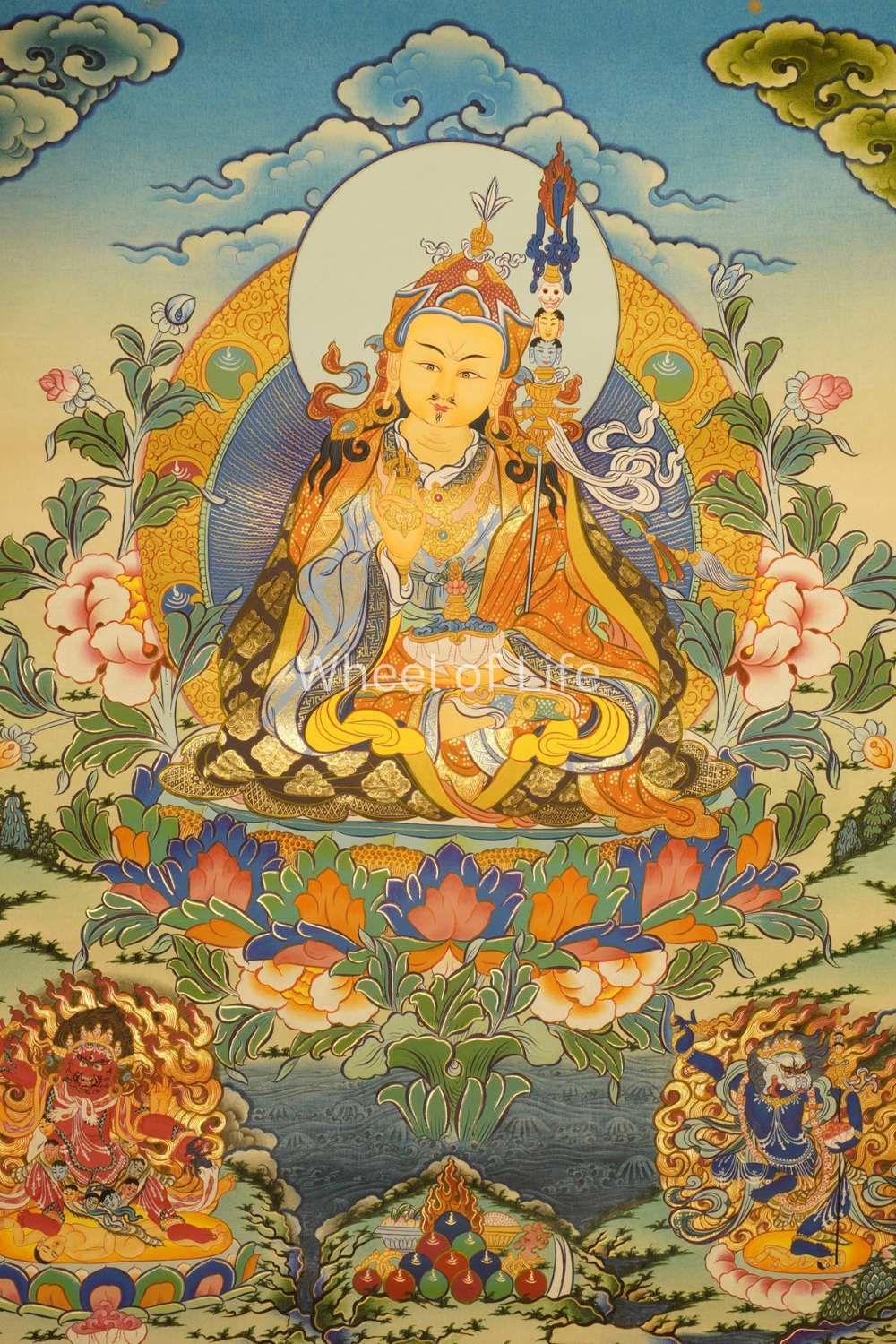
Padmasambhava, widely known as Guru Rinpoche (Precious Master), is a revered figure in Tibetan Buddhism believed to be the second Buddha who brought Vajrayana Buddhism to Tibet in the 8th century. His name, Padmasambhava, means “Lotus-Born,” as he is said to have miraculously appeared on a lotus flower in the land of Oddiyana. He is not only a historical teacher but also a semi-mythical figure, embodying both enlightened wisdom and supernatural powers.
Guru Rinpoche played a central role in transforming the spiritual landscape of Tibet. Invited by King Trisong Detsen, he subdued negative forces and harmonized native beliefs with Buddhist teachings, helping to establish the first Buddhist monastery at Samye. He transmitted profound tantric teachings and empowered many disciples, laying the foundation for the Nyingma school, the oldest of the four main schools of Tibetan Buddhism.
Artistically, Padmasambhava is often depicted seated in royal attire, symbolizing his mastery over both worldly and spiritual realms. He typically holds a vajra (thunderbolt) in his right hand, symbolizing compassion and skillful means, and a skull cup in his left hand, representing the transformation of negative forces. Resting on his shoulder is a khatvanga, a tantric staff, symbolizing his consort and spiritual power. His expression is usually serene yet fierce, embodying his ability to conquer inner and outer obstacles.
Guru Rinpoche is considered a master of meditation, a tamer of demons, and a teacher of the highest Buddhist practices. He is deeply venerated across the Himalayan region, especially in Tibet, Nepal, Bhutan, and among the Himalayan Buddhist communities. Devotees chant his mantra “Om Ah Hum Vajra Guru Padma Siddhi Hum” to invoke his blessings, guidance, and protection.
He is not only remembered as a great teacher but as a living presence, whose spiritual energy continues to support practitioners on the path to enlightenment.
Estimated Arrival





Customer Reviews
There are no reviews yet.