


 Contact us on WhatsApp:
Description
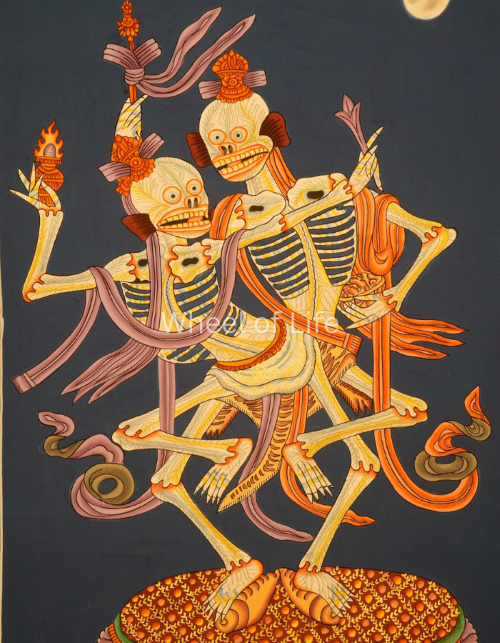
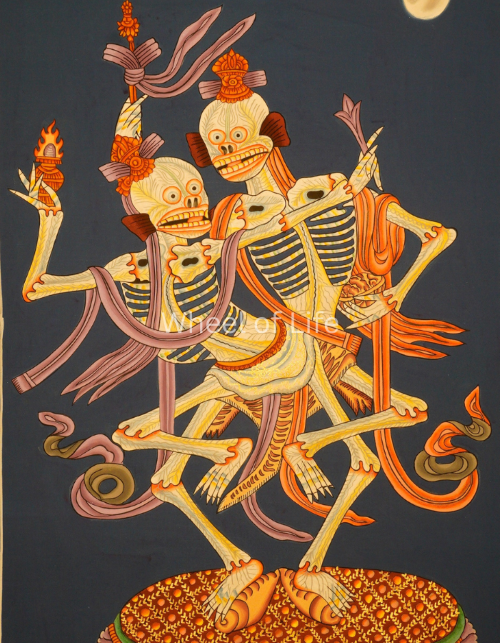
A Skeleton Thanka is a unique and often striking form of Tibetan Buddhist artwork that features skeletons or wrathful deities in skeletal form. These paintings are deeply symbolic and are not meant to be frightening but rather to convey profound spiritual teachings. Often, such thankas are used in tantric practices and rituals, especially within the Vajrayana tradition, to remind practitioners of the impermanence of life and the cycle of death and rebirth. Skeletons in this context are often depicted dancing or holding ritual items, symbolizing liberation from attachment and ego.
The artistic style of a Skeleton Thanka is rich with color, detail, and sacred geometry. The skeletons are usually set against elaborate backdrops filled with symbolic elements like flames, lotus petals, or clouds, each holding a specific spiritual meaning. The deities or skeleton figures may also be shown performing mystical dances or engaging in ritual activities, highlighting themes of transformation, fearlessness, and the transcendence of duality. These thankas are painted using traditional mineral pigments and are typically framed in silk brocade, maintaining the sacred and ceremonial aspect of the artwork.
Beyond its visual appeal, the Skeleton Thanka serves as a meditative aid and teaching tool. Practitioners use it to contemplate mortality, the illusion of the self, and the path to enlightenment. It helps cultivate detachment and awareness of the transient nature of the physical world. In this way, the Skeleton Thanka is not merely a piece of art but a spiritual instrument intended to awaken insight and deepen one’s practice on the Buddhist path.
Estimated Arrival



Customer Reviews
There are no reviews yet.