


 Contact us on WhatsApp:
Description
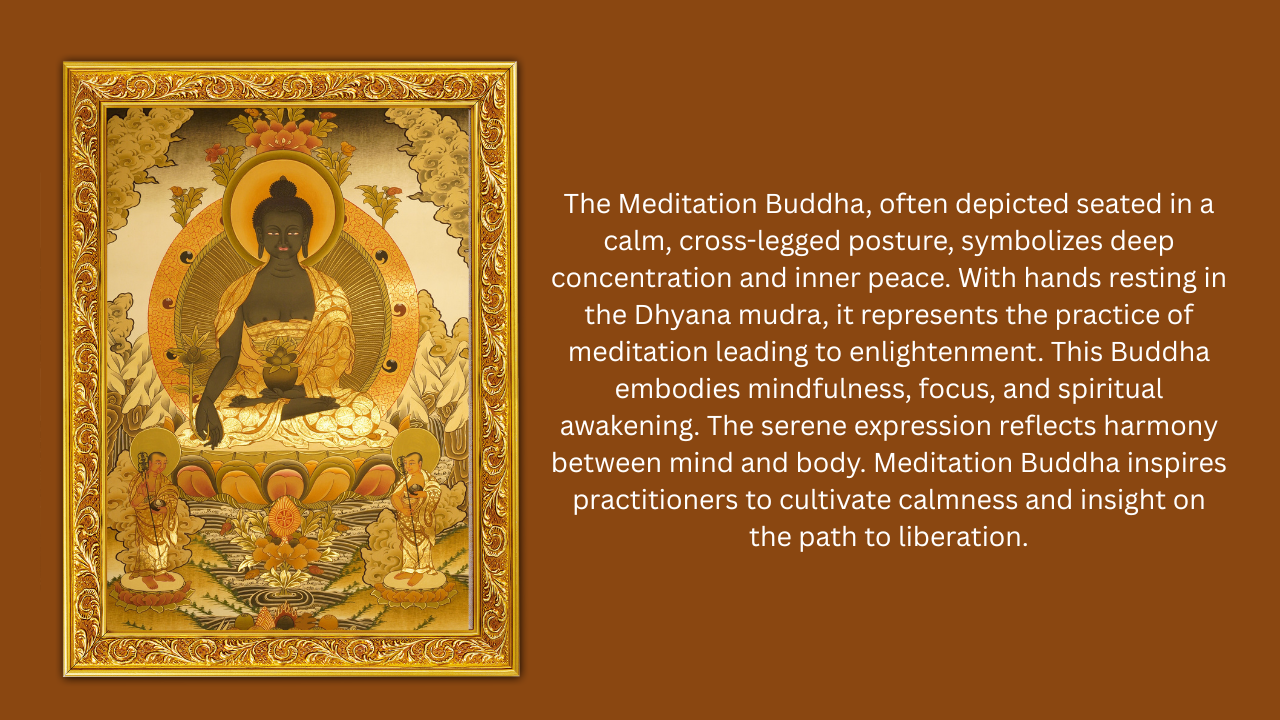
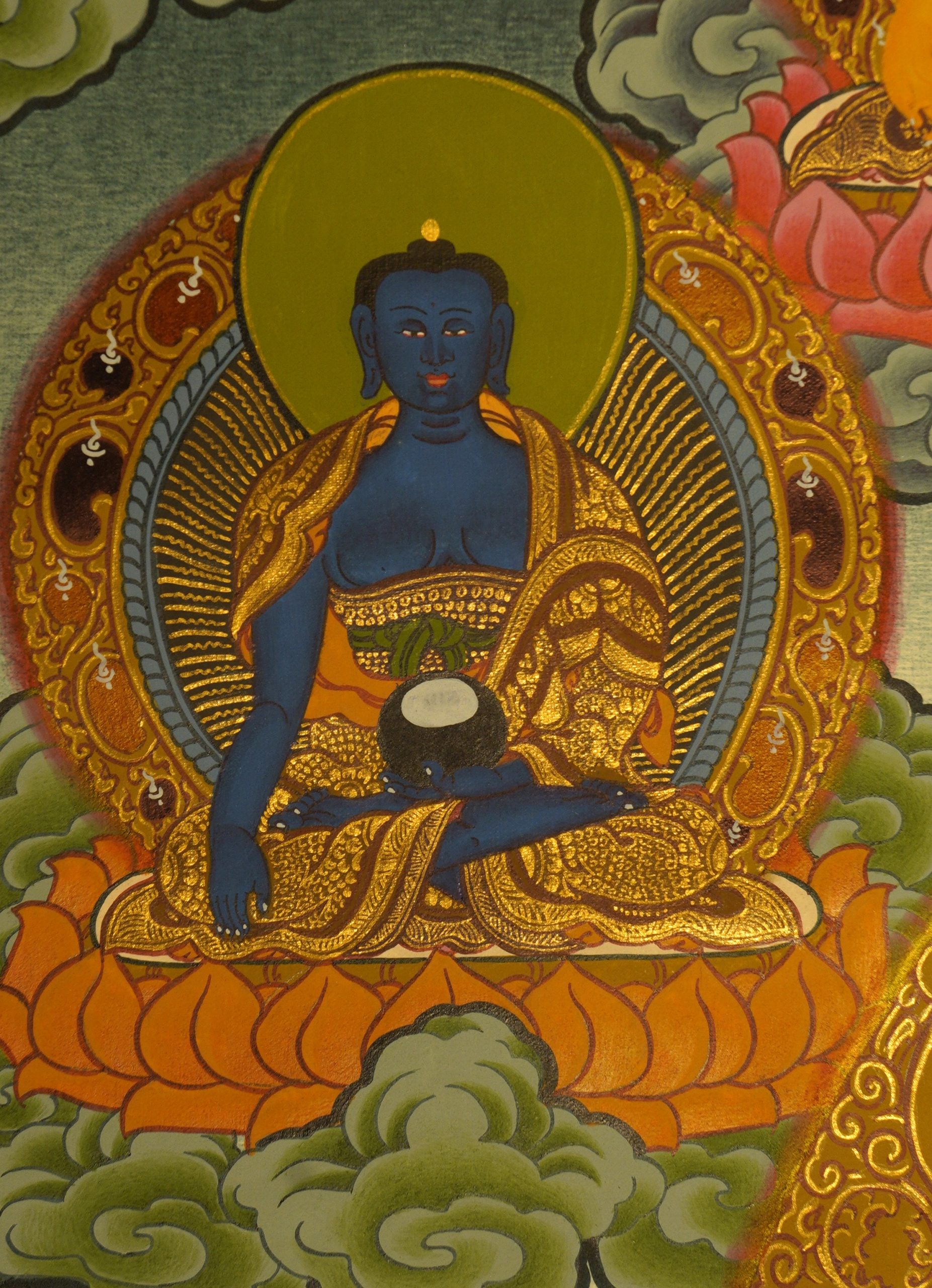
The Medicine Buddha, known in Sanskrit as Bhaisajyaguru, is a central figure in Mahayana Buddhism, particularly revered for his profound association with healing, medicine, and the alleviation of all forms of suffering—physical, mental, and spiritual. His iconography is distinct and laden with symbolic meaning: he is almost invariably depicted with a body of a deep, radiant lapis lazuli blue. This vibrant blue hue symbolizes ultimate purity, the clarity of wisdom, and the potent, all-encompassing healing power of the cosmos, much like the precious lapis stone itself which was historically prized for its medicinal and protective qualities. His presence embodies the ideal physician who cures not only physical ailments but also the deeper roots of suffering that stem from ignorance, attachment, and aversion, guiding sentient beings towards liberation and enlightenment.
Before his attainment of Buddhahood, Bhaisajyaguru, as a compassionate bodhisattva, articulated twelve magnificent vows that lay out his comprehensive commitment to relieving suffering across countless realms. These vows are remarkably detailed and demonstrate his vast empathetic reach. They include promises to illuminate infinite worlds with his radiant light, to awaken the minds of beings with the pure light of lapis lazuli, to provide all material necessities, to correct heretical views and guide beings towards the true Dharma, to help those who have violated moral precepts to purify their karma, to heal all manner of physical deformities and illnesses, to relieve the suffering of the poor and sick, to transform women who wish to be reborn as men, to heal mental afflictions and delusions, to free those who are oppressed or imprisoned, to alleviate hunger and thirst, and to clothe the destitute. These vows collectively paint a picture of an utterly selfless and all-encompassing desire to alleviate every conceivable form of distress.
Iconographically, the Medicine Buddha is consistently portrayed in a serene, meditative posture, typically seated upon a lotus throne, symbolizing purity and spiritual awakening. He is adorned in the simple, dignified robes of a monastic. His right hand is traditionally extended downwards in the Varada Mudra, the gesture of granting boons or blessings, symbolizing his bestowal of aid to all beings. Within this hand, he holds a branch or fruit of the myrobalan plant (Terminalia chebula), known in Tibetan medicine as “King of Medicines” due to its wide array of healing properties and its ability to balance the bodily humors. His left hand rests in his lap in a meditation mudra (Dhyana Mudra), symbolizing deep concentration and wisdom, and holds a medicine bowl filled with healing nectar or potent herbs. This bowl signifies his infinite capacity to dispense the spiritual medicine of the Dharma, curing the various poisons that afflict the mind and body.
The veneration and practice associated with the Medicine Buddha extend far beyond mere physical healing; they encompass a holistic approach to well-being that integrates mind, body, and spirit. Practitioners often engage in various spiritual disciplines to invoke his blessings and embody his compassionate qualities. These practices typically include the recitation of his powerful mantra: “Tayata Om Bekandze Bekandze Maha Bekandze Radza Samudgate Soha,” which is believed to carry profound purifying and healing vibrations. Visualization meditations, where one imagines the radiant blue light of the Medicine Buddha permeating one’s body, purifying negative energies and restoring balance, are also common. Making offerings of light, incense, and water are further expressions of devotion. Through these practices, devotees seek to purify negative karma, cultivate boundless compassion, and ultimately achieve a state of inner harmony, leading to improved physical health, enhanced mental clarity, and profound spiritual development. The Medicine Buddha thus serves as a timeless emblem that true healing requires addressing not just the symptoms, but the fundamental causes of suffering, guiding all beings towards the path of profound wisdom and boundless compassion.
Estimated Arrival





Customer Reviews
There are no reviews yet.