
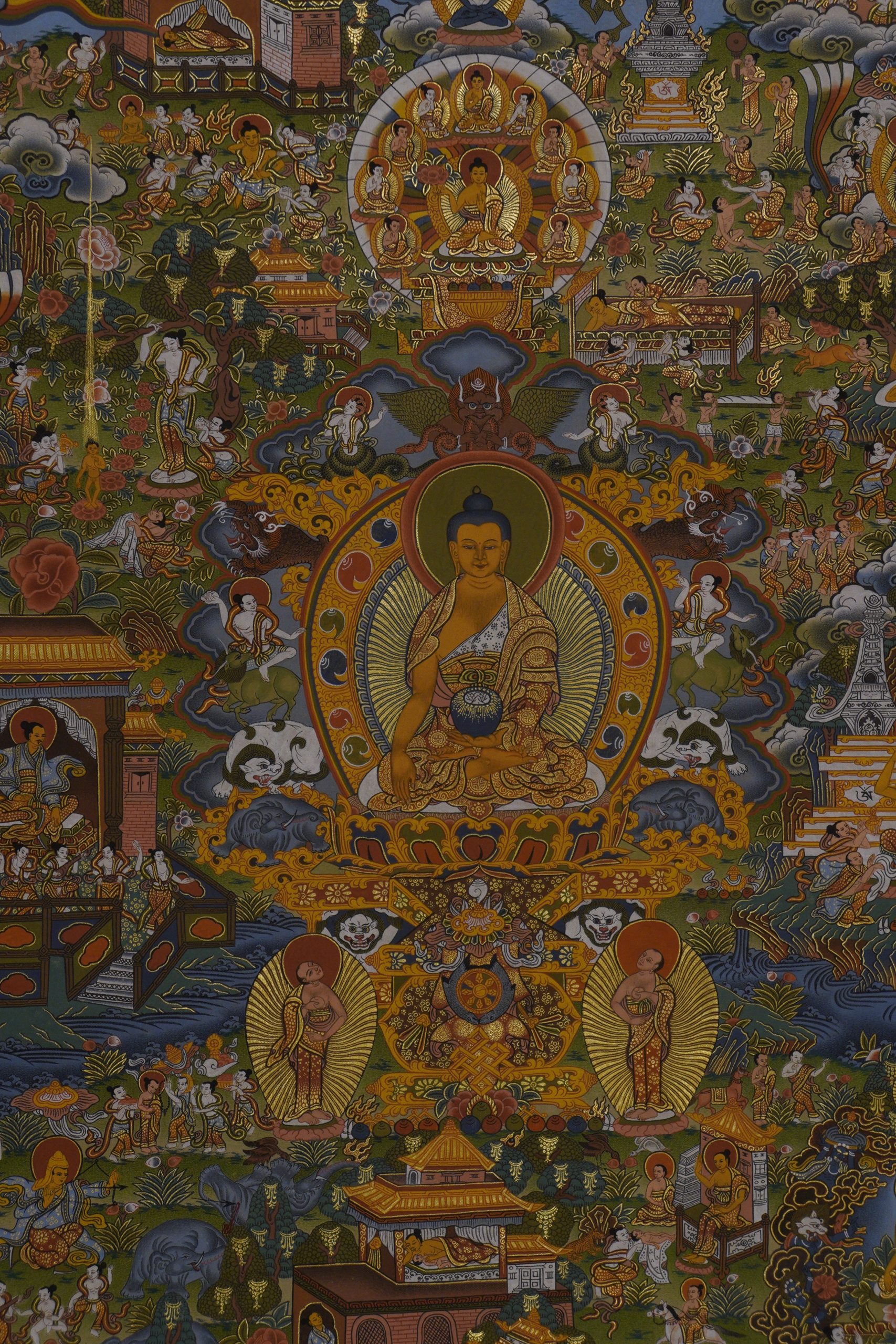
The Life of Buddha – A Journey to Enlightenment
The Life of Buddha is one of the most inspiring and transformative stories in human history. It is not just a biography of a historical figure—it is a spiritual guide that continues to touch millions of lives across the world. For those seeking peace, wisdom, and a deeper understanding of existence, the story of the Buddha offers timeless lessons. In the world of Buddhist art, especially through Thangka paintings, this sacred journey is beautifully captured in symbolic and visual form.
Understanding the Life of Buddha is essential for appreciating many Buddhist rituals, teachings, and artworks such as Thangka paintings, statues, and mandalas. When featured in an item like the Life of Buddha Thangka, each event in the Buddha’s life becomes a spiritual reminder of the path to enlightenment.
1. Birth of Siddhartha Gautama
The man who would become the Buddha was born around the 6th century BCE in Lumbini, present-day Nepal, as Prince Siddhartha Gautama, the son of King Śuddhodana and Queen Māyādevī of the Shakya clan. According to legend, Queen Maya had a divine dream in which a white elephant entered her side—an omen of the birth of a great being. Siddhartha was born during her journey to her parental home, and he immediately took seven steps, declaring that this would be his last birth.
2. A Sheltered Royal Life
As a prince, Siddhartha was raised in luxury and comfort. His father, hoping he would become a great king and not a spiritual leader, kept him away from all suffering and religious teachings. He was given everything he desired and shielded from the harsh realities of life.
3. The Four Sights
At the age of 29, Prince Siddhartha left the palace for the first time. On four separate journeys outside the palace walls, he encountered:
-
An old man (old age)
-
A sick person (illness)
-
A dead body (death)
-
A holy ascetic (spiritual seeker)
These experiences, known as the Four Sights, deeply shook him. He realized that no amount of worldly pleasure could prevent the inevitable truths of aging, sickness, and death.
4. The Great Renunciation
Disturbed by the suffering in the world, Siddhartha left his royal life, wife, and newborn son in search of truth and liberation. This act is called the Great Renunciation. He spent the next six years practicing severe austerities with spiritual teachers, seeking enlightenment through extreme self-denial.
5. Enlightenment Under the Bodhi Tree
Eventually, Siddhartha realized that neither luxury nor extreme asceticism could bring true wisdom. He adopted the Middle Way, a path of balance. Meditating under the Bodhi Tree in Bodh Gaya, he vowed not to rise until he had discovered the truth.
After intense meditation, he attained enlightenment (bodhi) and became the Buddha, or “the awakened one.” He overcame all temptations and distractions, gaining complete insight into the nature of suffering, its causes, and the path to end it.
6. First Sermon and Teaching the Dharma
Soon after enlightenment, the Buddha gave his first sermon at Deer Park in Sarnath to his former companions. He taught the Four Noble Truths and the Noble Eightfold Path, forming the foundation of Buddhism.
For the next 45 years, the Buddha traveled across northern India, teaching people of all castes and backgrounds. He established the Sangha (community of monks and nuns) and spread the Dharma (teachings) with compassion and clarity.
7. Mahaparinirvana – Final Passing Away
At the age of 80, Buddha passed away in Kushinagar, entering Mahaparinirvana, the final liberation from the cycle of birth and death. His last words to his disciples were:
“All conditioned things are subject to decay. Strive diligently for your own liberation.”
Spiritual and Commercial Significance
For eCommerce businesses selling Buddhist items like Thangka paintings, statues, or home decor, the Life of Buddha is more than a theme—it’s a story that resonates deeply with spiritual seekers around the globe. Products that depict or honor the Buddha’s life carry:
-
Symbolic meaning (compassion, peace, wisdom)
-
Cultural value (originating from South Asia)
-
Decorative beauty (especially in handmade thangkas)
-
Spiritual power (ideal for meditation and mindful spaces)